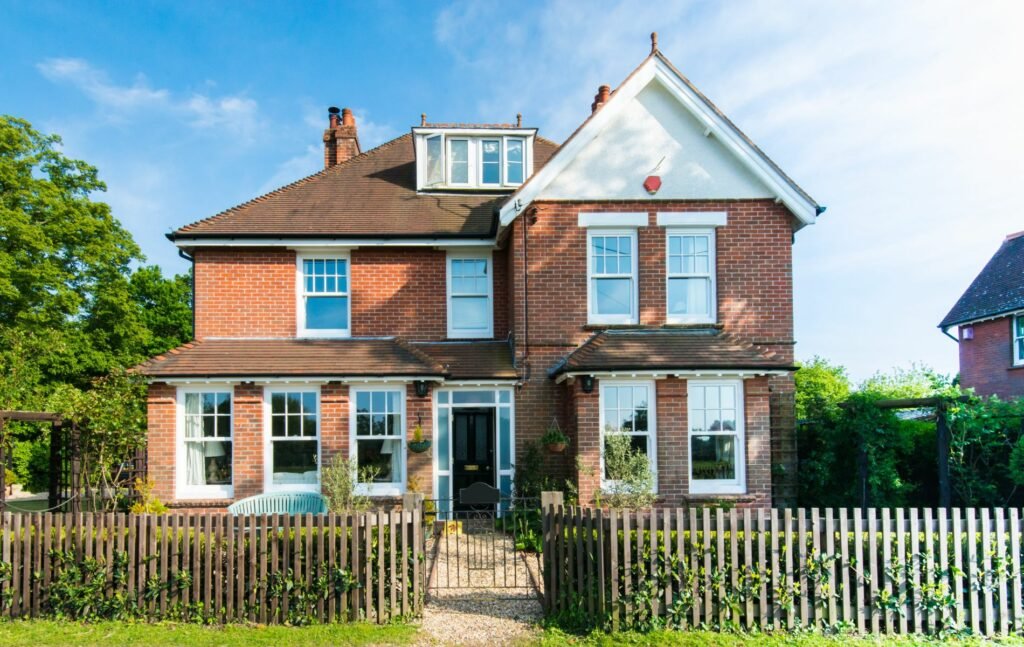

The biggest firm I met had a marble reception and a wall of awards. The smallest was one architect working from a converted garage with a kettle and a drawing board. I went with the garage. Best decision of the whole project, and one I almost didn’t make because I assumed bigger meant better.
When you start looking at an architect firm in London, the instinct is to trust size. A big practice feels safe. More staff, more awards, more reassurance. But for a single house extension, that size can work against you, and it took meeting all of them to understand why.
The small firm gave me the one thing the big ones couldn’t. The actual architect, the one who designed my project, was the person I spoke to every single time. No account managers, no juniors, no being passed around. Just the person doing the work.
What the Big Firms Offered
The large practices were impressive on paper. Slick portfolios, big commercial projects, a long list of staff with specialisms. They clearly knew what they were doing at scale.
But my project was a rear extension on a terraced house. Tiny compared to what they usually handle. I got the sense I would be a small fish, handed to a junior while the senior names chased bigger work.
That isn’t a criticism of their ability. It is just a mismatch. A firm built for large schemes isn’t always the right home for a modest house extension.
Why I Worried About a Small Firm
My hesitation about the small firm was the obvious one. What if he got ill, or overloaded, or simply couldn’t handle the technical side alone. A big firm has cover. One person doesn’t.
I also worried about credibility. Would the council take a one man practice seriously. Would the build feel less professional. These fears nearly pushed me toward the safe big name.
In the end I asked him directly about all of it. His answers were honest and practical, and they put my mind at rest more than any glossy brochure had.
The Questions That Changed My Mind
I asked the small firm who would actually do my drawings. He said, plainly, me. I asked the big firm the same. They talked about a team, which I slowly realised meant not the person in front of me.
I asked about cover if he was ill. He had arrangements with two other local architects and was upfront about it. I asked about the council. He had submitted dozens of applications in my borough and knew the officers by name.
Those answers flipped my thinking. The small firm wasn’t a risk. It was a more direct version of the same service, without the layers in between.
The Value of Talking to One Person
Once the project started, the benefit became obvious every week. When I had a question, I asked the man who designed it. He knew every detail because he had drawn every line.
There was no game of telephone. No explaining my situation to a new person each time. No decisions getting lost between a senior designer and a junior drafter. One brain held the whole project.
That continuity showed in the work. Small choices made early carried through to the end because the same person remembered why they were made. A bigger firm with handovers loses that thread.
Local Knowledge Over Brand Name
The thing that sealed it was how well he knew the area. He had worked on several homes within a mile of mine. He knew the local architects near me scene, the builders who worked well on these streets, the council officers and their habits.
That local depth mattered more than any award. A big firm with national reach didn’t know my specific streets the way he did. For a residential project, that local knowledge is worth more than brand recognition.
He knew which builders could access a terrace with no side passage. He knew the conservation quirks of my row. That came from working the area, not from the size of the firm.
How to Judge Firm Size for Your Project
Match the firm to the job. A large commercial scheme suits a large practice. A house extension often suits a smaller, focused one. Bigger is not automatically better.
Ask who actually does your work and who you will speak to throughout. If the answer is vague or involves layers of staff, weigh that against a smaller firm where you deal with the designer directly.
And ask about local experience over national reputation. For a home, the firm that knows your borough beats the firm with the flashiest office. Six to eight months from that garage meeting to a finished extension, designed and seen through by one person who knew it inside out. The marble reception was lovely. The garage built me a better house.
Visit For More Info: Cast Magazine