The courtroom already has its own kind of heat. A witness sits beneath bright lights, surrounded by polished wood, sharp questions, formal rules, and the heavy awareness that every word may matter. Cross-examination can feel less like a conversation and more like a controlled stress test, designed to challenge memory, confidence, and emotional control.
That pressure becomes something entirely different when the building itself interrupts the proceeding. A sudden alarm, a judge calling for evacuation, security staff directing people toward exits, and a crowd moving through public corridors can turn a legal moment into a physical emergency. In that instant, two worlds collide: the metaphorical trial by fire of testimony and the very real urgency of leaving a civic building safely. That is why preparation matters long before anyone takes the stand, and why resources connected to Blackledge Investigations, Connecticut, can be part of a broader conversation about witness readiness, emotional discipline, and high-pressure decision-making.
When the courtroom becomes two trials at once
A witness prepared for aggressive questioning expects mental pressure. They may know opposing counsel will test their timeline, challenge their wording, or try to expose uncertainty. What they may not expect is a fire alarm cutting through the room just as they are trying to stay composed.
The body does not separate legal stress from physical stress as neatly as the mind might. A hostile question can trigger a racing heart, tight breathing, and a surge of adrenaline. So can an emergency alarm. In both moments, the nervous system wants to push the person toward fight, flight, or freeze. The problem is that none of those instincts is especially helpful when someone needs to answer carefully, follow directions, and keep themselves safe.
This is where composure becomes more than a personality trait. It becomes a trained response. A well-prepared witness understands how to pause, breathe, listen, and respond with intention. That same skill matters during an evacuation. The person who can slow their breathing after a confrontational question is also better equipped to hear safety instructions, notice exit signs, and avoid being swept into panic.
Reading the room before the room changes
Public legal complexes can be confusing even on an ordinary day. They often contain multiple courtrooms, waiting areas, security checkpoints, stairwells, holding spaces, administrative offices, and crowded corridors. People may be nervous, distracted, or unfamiliar with the building layout before anything unusual happens.
Situational awareness should start the moment someone enters the building. This does not mean acting fearful or suspicious. It means noticing practical details: where the nearest exits are, which stairways are marked for emergency use, where staff or security personnel are stationed, and how people are moving through the space. These observations may seem small, but they become valuable when the normal flow of the day is interrupted.
Elevators are a key example. During many emergency evacuations, elevators should be avoided unless trained personnel specifically direct otherwise. Stairwells are usually the safer route because they are designed to support orderly evacuation. In a high-occupancy civic building, however, stairwells can quickly become crowded. That makes patience and calm movement essential. Rushing, pushing, or stopping in narrow areas can create more danger than the original alarm.
Safety tools are only useful when people stay calm
Fire alarms, sprinklers, extinguishers, exit signage, and emergency lighting are part of a larger safety system. In a public building, these tools are meant to guide large groups of people through stressful moments without turning confusion into chaos.
The challenge is that most visitors do not think about safety systems when they arrive at court. They are thinking about testimony, case outcomes, paperwork, parking, schedules, and nerves. That is why public-use safety tools must be visible, accessible, and supported by routine care. Training and awareness matter, but so does maintaining essential safety equipment so people can rely on it when seconds matter.
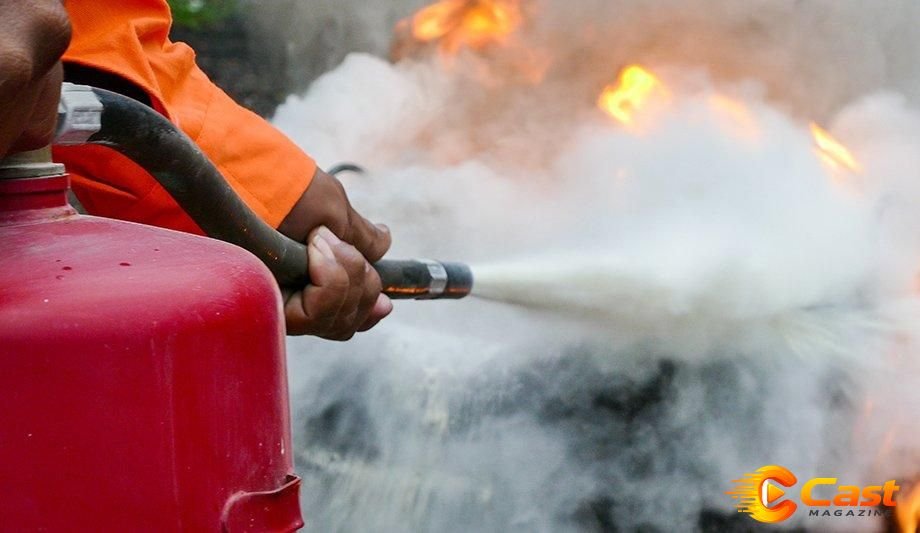
A fire extinguisher mounted on a wall is not an invitation for every untrained person to become a firefighter. In a crowded legal complex, using an extinguisher should generally be left to people who understand when and how to use it safely. The average visitor’s priority is different: listen for instructions, leave through the proper route, avoid elevators, keep walkways clear, and do not re-enter until authorities say it is safe.
When the alarm breaks the witness’s rhythm
A sudden evacuation does more than move people out of a room. It breaks concentration. A witness who was carefully following the questions, managing their nerves, and choosing their words with precision may suddenly be surrounded by noise, movement, and uncertainty.
That interruption can matter when testimony resumes. The witness may return feeling scattered, irritated, embarrassed, or anxious. They may struggle to remember exactly where the questioning left off. Opposing counsel may use the pause to reset their strategy, sharpen a line of attack, or revisit a topic from a different angle. The alarm may be over, but the pressure is not.
This is why witness preparation should include more than rehearsing likely questions. It should teach grounding skills. A witness should know how to return to the basics after any disruption: listen fully, wait for the question to finish, answer only what is asked, avoid guessing, and ask for clarification when needed. The goal is not to sound rehearsed. The goal is to remain consistent, honest, and steady even when the rhythm changes.
A useful mental reset can be simple. Take one breath before answering. Place both feet on the floor. Focus on the exact question being asked now, not the question from ten minutes earlier. Remember that a pause is allowed. Composure is often built in those small spaces between stimulus and response.
The danger of carrying panic back to the stand
After an evacuation, people often want to talk. They may speculate about what happened, complain about the delay, replay the moment the alarm sounded, or ask others what they think will happen next. That is natural, but it can also pull a witness away from their preparation.
A witness should be careful about hallway conversations during a disruption. Even casual comments can become risky if they touch on testimony, strategy, credibility, or emotional reactions to the case. Public buildings are full of strangers, attorneys, staff, and other parties. The safest approach is to stay polite, calm, and quiet about the substance of the matter.
The same principle applies internally. Panic can cause a person to overcorrect. They may return to the stand determined to sound stronger, more certain, or more defensive than before. That can lead to exaggerated answers or unnecessary explanations. A prepared witness understands that consistency matters more than performance. The goal is not to win the room with confidence. The goal is to tell the truth clearly.
Preparation is the shared blueprint
Courtroom pressure and emergency evacuation may seem like unrelated challenges, but they share the same foundation. Both require people to override instinct, follow a process, and trust preparation.
No one learns how to handle an aggressive lawyer for the first time while sitting on the stand. No one should be reading extinguisher instructions for the first time while smoke fills a room. The moment of crisis is not the moment to invent a plan. It is the moment to use the plan already built.
For a witness, that plan includes understanding the case facts, practicing clear answers, managing emotional triggers, and knowing how to recover after interruption. For building safety, it includes recognizing exits, respecting alarms, avoiding unsafe routes, and following trained personnel. In both settings, preparation does not remove pressure. It gives pressure somewhere to go.
The strongest people in high-stakes environments are not the ones who feel nothing. They are the ones who know what to do while feeling everything. Whether the heat comes from a pointed question or a sudden alarm, composure is not luck. It is training put into motion.