
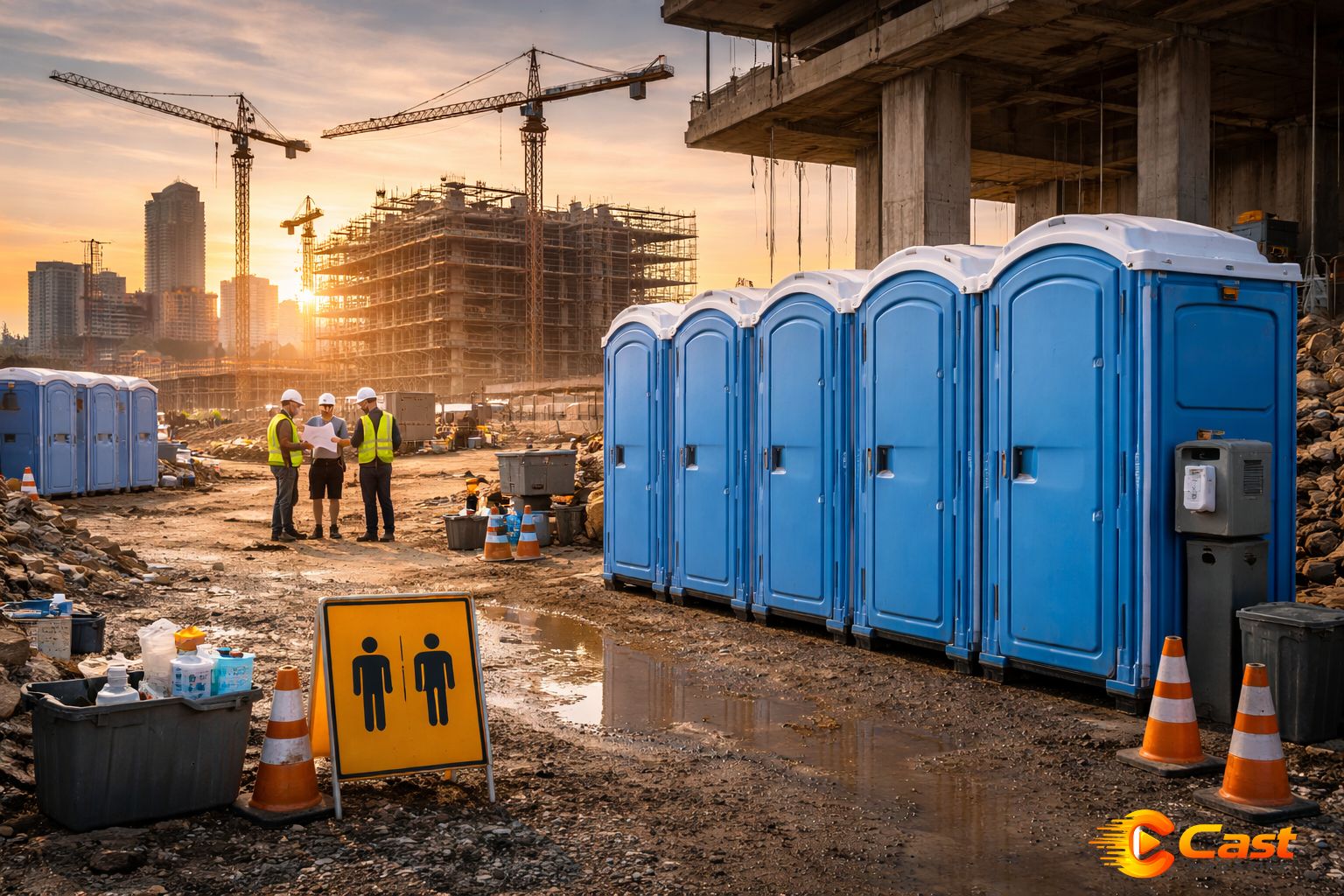
Long-term commercial construction projects require careful planning across every aspect of job site operations. Contractors must coordinate labor, equipment, materials, safety programs, deliveries, and site logistics over periods that may last several months or even years. One area that is sometimes overlooked during early planning stages is job site sanitation.
Portable restroom planning plays an important role in supporting productivity, workforce comfort, and overall site organization. On large commercial projects, restroom needs can evolve significantly as crews expand, work zones shift, and construction phases change. Contractors who plan ahead are better positioned to maintain efficient operations throughout the life of the project.
Why Sanitation Planning Matters on Long-Term Projects
Unlike short-duration jobs, commercial construction projects often experience significant fluctuations in workforce size over time. A site may begin with a small group of excavation and utility crews before growing to include framers, electricians, plumbers, concrete teams, HVAC contractors, and finish trades.
As worker counts increase, so does demand for restroom facilities. If sanitation planning does not keep pace with project growth, crews may face longer walks, increased downtime, and reduced convenience throughout the workday.
Proper planning helps ensure facilities remain accessible and adequate during every stage of construction.
Including Sanitation in Early Site Logistics Planning
Portable restrooms should be considered during the same planning discussions as staging areas, material storage, equipment routes, and site access points.
Contractors who address sanitation needs early can identify the best locations for facilities and ensure service vehicles can access them throughout the project. Early planning also helps prevent conflicts with future construction activities that may affect restroom placement later.
By incorporating sanitation into the overall logistics strategy, contractors create a more organized and efficient job site from the start.
Choosing Strategic Restroom Locations
Location is one of the most important factors in successful sanitation planning. Restrooms should be convenient for workers without interfering with active construction operations.
Many contractors coordinate porta john rental services before work begins so facilities can be positioned in locations that support daily operations.
Ideal placement typically provides easy access for crews while maintaining clear separation from material staging zones, delivery routes, and heavy equipment traffic. Proper positioning reduces unnecessary travel time and helps workers remain focused on productive tasks.
Planning for Workforce Growth
One of the biggest challenges on long-term commercial projects is anticipating changes in workforce size. A site that begins with a handful of workers may eventually host dozens or even hundreds of personnel during peak construction periods.
Contractors should evaluate staffing projections throughout the project timeline and adjust sanitation capacity as needed. Waiting until facilities become insufficient often results in operational disruptions that could have been avoided with proactive planning.
Scalable sanitation solutions help support changing workforce demands without affecting productivity.
Coordinating Restrooms with Project Phases
Construction sites evolve significantly as work progresses. Areas that are easily accessible during site preparation may become active building zones later in the project.
Contractors should periodically evaluate restroom locations and determine whether facilities need to be relocated to better serve current work areas. Adjusting placement as construction advances helps maintain accessibility while minimizing disruption to ongoing operations.
Flexibility is an important component of long-term sanitation planning.
Supporting Multiple Trades Across the Site
Commercial projects often involve numerous subcontractors working simultaneously across different portions of the site. Electricians, plumbers, concrete crews, steel installers, roofers, and finish contractors may all have distinct work areas.
Portable restroom placement should account for how these crews are distributed throughout the project. Facilities that are conveniently located for one trade may be impractical for another if work zones are spread across a large property.
Strategic planning helps ensure restroom access remains efficient for all workers onsite.
Maintaining Service and Cleanliness Standards
Long-term projects require consistent restroom servicing to maintain cleanliness and functionality. As facilities are used daily for months at a time, regular maintenance becomes essential.
Service schedules should be based on workforce size, project duration, and usage levels. Contractors who coordinate routine servicing help ensure facilities remain clean, stocked, and ready for continued use throughout the project.
Reliable maintenance also contributes to a more professional and organized job site environment.
Reducing Unnecessary Worker Travel
One of the hidden benefits of proper restroom placement is reduced travel time. When facilities are conveniently located, workers spend less time walking across the site and more time engaged in productive construction activities.
On large commercial projects, even small reductions in daily travel time can add up significantly over the course of several months. Convenient access helps improve efficiency while supporting worker comfort.
Thoughtful sanitation planning contributes directly to overall project productivity.
Improving Job Site Organization
Portable restrooms are part of a larger job site infrastructure system. Along with staging areas, storage zones, and equipment parking locations, restroom facilities help establish structure and organization across the property.
Well-planned sanitation areas create designated locations for worker facilities and reduce random movement throughout the site. This contributes to a more orderly environment that supports better coordination between trades and project teams.
Organization becomes increasingly important as project complexity grows.
Supporting Safety Objectives
Sanitation planning can also contribute to job site safety. Facilities positioned away from active equipment routes and high-traffic construction zones help reduce unnecessary exposure to potential hazards.
Maintaining clear access to restrooms while preserving safe pedestrian pathways supports both worker convenience and overall site safety. Contractors should periodically review facility locations to ensure they continue aligning with evolving site conditions.
Safe access remains a key consideration throughout the project lifecycle.
Accommodating Weather and Seasonal Conditions
Long-term commercial projects often span multiple seasons, creating additional planning considerations. Rain, mud, snow, and changing ground conditions can affect restroom accessibility and servicing requirements.
Contractors should evaluate how seasonal conditions may impact facility placement and make adjustments when necessary. Maintaining reliable access throughout changing weather conditions helps ensure sanitation services remain effective year-round.
Planning for seasonal changes reduces the likelihood of operational disruptions.
Demonstrating Professional Project Management
Owners, developers, inspectors, and project stakeholders often evaluate construction sites based on their overall organization and management. Well-maintained sanitation facilities contribute to a more professional project image and demonstrate attention to operational details.
A clean, organized site reflects positively on the contractor and helps reinforce confidence in project leadership. Proper sanitation planning shows that workforce needs are being addressed as part of a comprehensive site management strategy.
Professional presentation matters throughout every phase of commercial construction.
Adapting as the Project Evolves
No long-term project remains exactly the same from start to finish. Workforce levels change, building footprints expand, and operational priorities shift over time.
Contractors who regularly review sanitation needs and make adjustments as conditions change are better able to maintain efficiency throughout the project. Ongoing evaluation ensures restroom facilities continue supporting productivity and site organization regardless of how the project develops.
Adaptability is one of the keys to successful long-term planning.
Portable toilet planning is an important component of managing long-term commercial construction projects. By incorporating sanitation into early logistics planning, adjusting capacity as workforce demands change, and maintaining consistent service throughout construction, contractors can support a more organized and productive job site.
When restroom facilities are strategically placed and properly maintained, workers benefit from convenient access, project efficiency improves, and overall site operations run more smoothly. For long-term commercial construction projects, effective sanitation planning is an essential part of successful project management.
Visit For More Info: Cast Magazine