Most organizations today are not suffering from a lack of data. They are suffering from a lack of clarity.
In almost every industry, companies are surrounded by dashboards, analytics tools, KPIs, and real-time reporting systems. Data has become abundant, accessible, and continuous. Yet despite this, decision-making remains one of the hardest challenges inside modern enterprises.
The real issue is not information. The real issue is understanding what that information actually means in terms of capability, readiness, and execution.
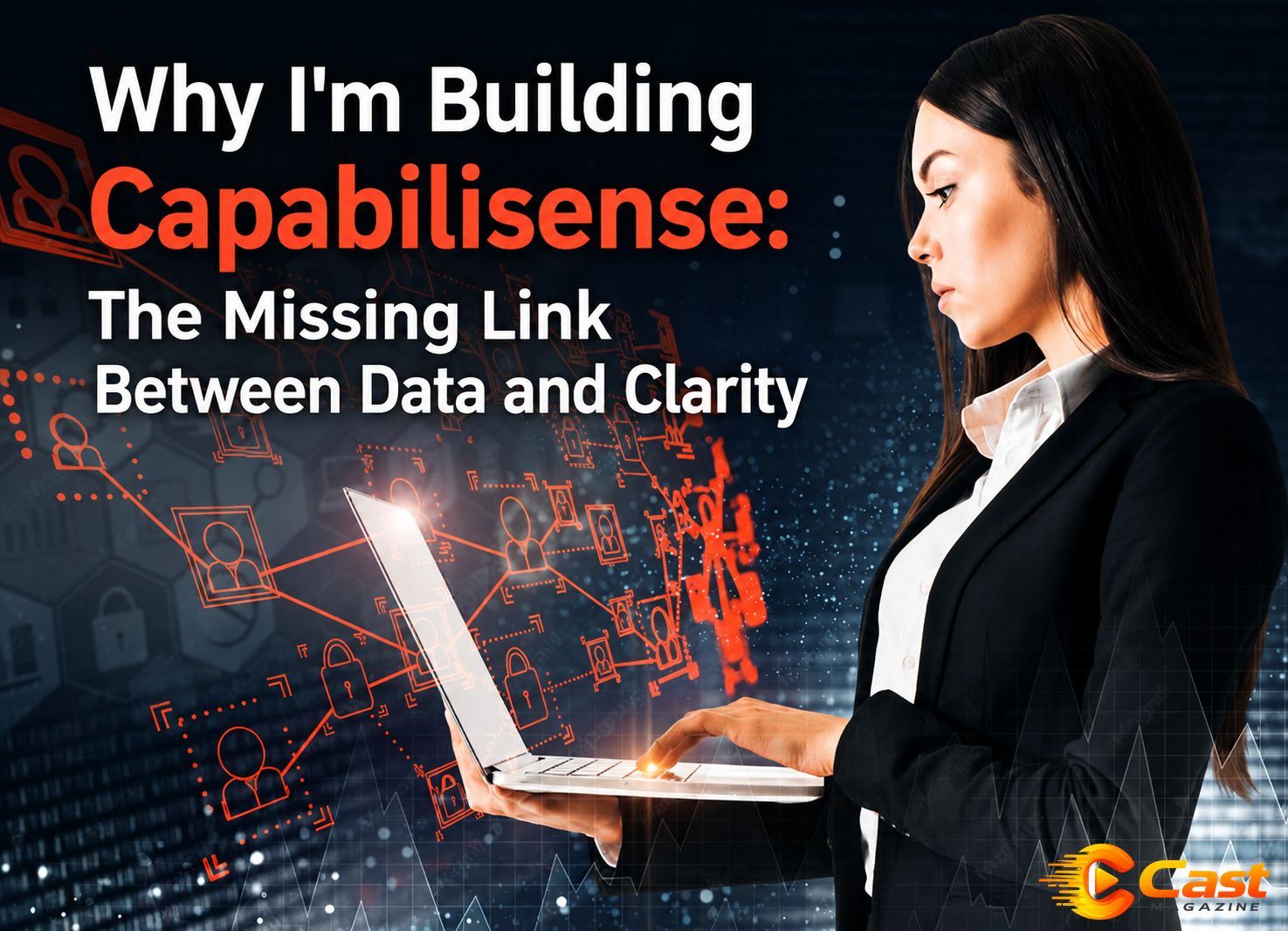
This is the core reason I’m building Capabilisense—a capability intelligence platform designed to help organizations move beyond data and into true decision clarity.
The Core Problem: Data Without Clarity Creates Confusion
We live in an era where organizations generate more data in a single day than entire industries used to generate in years. Everything is measurable, from team performance to customer behavior to system efficiency.
However, having more data has not necessarily improved decision-making.
The problem is simple but deeply important: data shows what is happening, but it does not explain what an organization is actually ready to do next.
Leaders can see performance metrics, but they still struggle to answer critical questions such as whether their organization is ready for transformation, whether teams are aligned for execution, or whether systems can support future scaling.
This gap between visibility and understanding creates confusion, even in highly data-driven companies.
The Hidden Capability Gap Inside Every Organization
Beyond data and dashboards, every organization has an invisible layer that determines success or failure. This layer is capability—the true ability of an organization to execute change effectively.
Most companies measure outcomes such as revenue, productivity, and delivery speed. But these metrics do not fully represent capability readiness.
As a result, organizations often assume they are ready for change because their performance looks strong on paper. However, when complexity increases or transformation begins, hidden weaknesses start to appear.
This is the capability gap—the space between perceived readiness and actual readiness.
It remains invisible in most systems, yet it is one of the biggest reasons why digital transformation and large-scale change initiatives fail.
Lessons From 30 Years in Technology and Enterprise Systems
After working for decades in technology, cloud transformation, and enterprise environments, I began to notice a consistent pattern across different industries and organizations.
The tools, technologies, and strategies would change, but the underlying problems remained the same.
Projects were often delayed not because of technical limitations, but because organizations lacked a clear understanding of their own internal capability structure. Teams worked in silos, dependencies surfaced too late, and leaders often made decisions based on assumptions rather than real visibility.
Over time, it became clear that most enterprise failures are not caused by lack of effort or intelligence, but by a lack of capability awareness at the right time.
Why Traditional Tools Are Not Enough Anymore
Modern organizations rely heavily on business intelligence systems, dashboards, and reporting tools. These systems are powerful, but they are designed to show performance, not readiness.
A dashboard can tell you what happened yesterday, what is happening today, and sometimes even what might happen tomorrow based on trends. But it cannot tell you whether your organization is structurally ready to execute a major transformation.
It cannot show whether teams are aligned, whether systems are scalable, or whether hidden dependencies will create failure points later in execution.
This creates a false sense of confidence where organizations believe they understand reality, while in fact they are only seeing a partial view of it.
Why I’m Building Capabilisense: Moving From Data to Capability Intelligence
Capabilisense is designed to solve this gap by introducing a new layer of understanding: capability intelligence.
Instead of focusing only on performance metrics, it focuses on organizational readiness, structural strength, and execution feasibility.
In simple terms, Capabilisense helps organizations understand not just how they are performing, but what they are actually capable of doing next.
It acts as a capability radar for enterprises, helping leaders identify strengths, risks, and gaps before they turn into execution problems.
This shift is important because it moves organizations from reactive decision-making to proactive intelligence-driven planning.
How Capabilisense Brings Clarity to Complex Systems
Organizations are complex systems made up of people, processes, and technology. These systems generate signals constantly, but these signals are often scattered across different tools and departments.
Capabilisense brings these signals together into a unified view of capability.
Instead of analyzing data in isolation, it connects different layers of information such as system performance, team behavior, operational flow, and structural dependencies.
The result is not more data, but better understanding.
This transformation allows leaders to move from fragmented dashboards to a clear view of organizational readiness.
Why Capability Intelligence Is Critical in the AI Era
We are entering a period where artificial intelligence is becoming central to almost every business strategy. However, many organizations are rushing into AI adoption without fully understanding whether they are ready for it.
AI requires strong foundations such as clean data systems, aligned processes, and mature operational structures. Without these foundations, AI initiatives often fail to deliver meaningful value.
This is why capability intelligence is becoming increasingly important. It helps organizations evaluate readiness before they invest heavily in transformation.
Capabilisense plays a role in ensuring that AI adoption is built on real organizational strength, not assumptions.
The Human Side of Capability Intelligence
At its core, every organization is made of people. And people need clarity to perform well.
One of the biggest challenges in modern workplaces is the gap between expectations and actual capability. When expectations are higher than what teams can realistically deliver, stress and burnout increase. When expectations are too low, growth and motivation decrease.
Both situations create long-term inefficiencies inside organizations.
By making capability visible, Capabilisense helps leaders set more realistic expectations and helps teams work in a more balanced and sustainable environment.
This improves trust, reduces burnout, and strengthens collaboration across the organization.
The Vision: A Future Built on Capability Clarity
The long-term vision behind Capabilisense is to create a world where organizations fully understand their own capabilities in real time.
Instead of relying on assumptions or fragmented data, companies will have a continuous view of what they can do, what they are ready for, and what they should avoid.
This introduces the idea of a capability twin—a living model of organizational readiness that evolves as the organization grows and changes.
In such a world, decision-making becomes faster, safer, and significantly more accurate.
Final Thoughts: Why This Problem Matters More Than Ever
We are living in a time of rapid technological change. Artificial intelligence, automation, and digital transformation are reshaping industries at a speed that many organizations struggle to keep up with.
However, despite all this progress, one fundamental truth remains unchanged.
Organizations do not fail because they lack ambition. They fail because they lack clarity.
This is why I’m building Capabilisense—to bring clarity back into a world full of data noise, and to help organizations understand what they are truly capable of doing.
Because in the end, clarity is not just an advantage. It is the foundation of successful execution.
FAQs
What is Capabilisense in simple words?
Capabilisense is a capability intelligence platform that helps organizations understand what they are truly ready to do. Instead of only showing data or dashboards, it focuses on organizational readiness, capability strength, and execution clarity so leaders can make better decisions.
Why is Capabilisense being built?
Capabilisense is being built because most organizations struggle not due to lack of data, but due to lack of clarity. Even with advanced dashboards and analytics tools, leaders often cannot understand their real capability to execute change, adopt AI, or scale operations effectively.
What problem does Capabilisense solve?
Capabilisense solves the gap between data and real decision-making clarity. It helps organizations understand their hidden capability gaps, reduce uncertainty in planning, and improve execution success by showing what they are actually ready to do.
How is Capabilisense different from traditional dashboards?
Traditional dashboards focus on performance metrics and historical data. Capabilisense goes beyond that by focusing on capability intelligence. It shows readiness, system maturity, and alignment instead of just numbers and reports.
Who can benefit from Capabilisense?
Capabilisense is designed for leaders, transformation teams, product managers, and organizations undergoing digital change. It is especially useful for companies working on AI adoption, cloud migration, or large-scale transformation projects.
How does Capabilisense help with AI adoption?
Capabilisense evaluates whether an organization is actually ready for AI by analyzing capability maturity, system strength, and team alignment. This helps prevent failed AI projects by ensuring the foundation is strong before implementation begins.
Why do organizations need capability intelligence?
Organizations need capability intelligence because data alone is not enough for decision-making. Without understanding readiness and execution capability, companies often make assumptions that lead to delays, failures, or inefficiencies.
Does Capabilisense replace human decision-making?
No, Capabilisense does not replace human decision-making. Instead, it enhances it by providing clear, structured insights about organizational capability so leaders can make more informed and confident decisions.
What is the long-term vision of Capabilisense?
The long-term vision is to create a world where every organization has real-time visibility into its capabilities. This includes the concept of a capability twin that continuously shows readiness, risks, and growth potential for better strategic planning.
Visit For More Info: Cast Magazine